
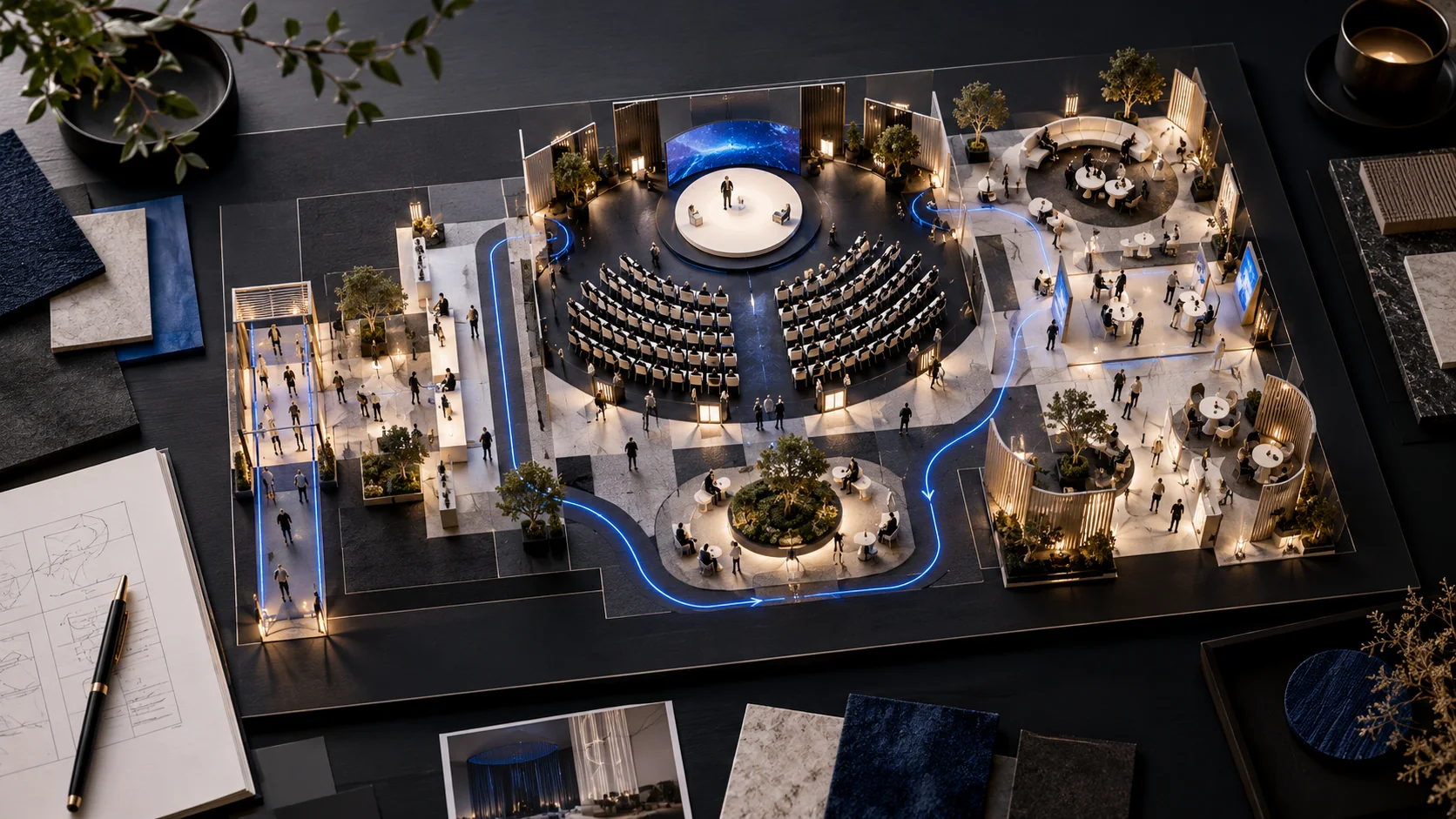
Planning in this order helps teams make decisions while they are still easy to change. It also gives agencies, brands, and production partners a shared picture of what the event is meant to achieve.
Define what the event needs to achieve.
Build one central idea around the audience and message.
Map the guest journey from arrival through departure.
Show how the idea works in the space and programme.
Use the right level of visual proof before production.
01 — PURPOSE
Define what the event needs to achieve
Is the event introducing a product, bringing partners together, celebrating a milestone, training a team, or creating a memorable brand encounter? The answer influences the tone, space, content, and guest flow.
Clarify the audience, the message guests should remember, the action they should take, and the known constraints: venue, date, attendance, technical requirements, and budget range. These details give every creative decision a practical test: does it help the event do its job?
02 — THE IDEA
Build one central event idea
The theme should connect the audience, message, and experience. A strong concept can be explained in one sentence, then translated into the event's visual language, stage, signage, screen content, and key moments. Choose the concept before choosing decoration so each design decision supports the same purpose.
03 — THE JOURNEY
Map the guest journey from arrival to departure
Follow the experience in sequence: invitation, arrival, registration, waiting, entry, reveal, main programme, interaction, and departure. At each step, ask what guests need to understand, where they need to go, and what they should feel or do.
This often reveals congestion, unclear transitions, and missed interaction opportunities before layouts are final. It also gives the team a way to connect the event story to the actual venue experience.
04 — THE PRESENTATION
Turn the journey into a concept people can review
Show how the idea works through a concise story, annotated layouts, stage or space views, lighting and material direction, screen moments, and visual references. A client-ready presentation should answer: what is the idea, how does it work for guests, what will the venue feel like, and what decisions are needed now?
Use sketches, renders, or a cinematic walkthrough according to the decision. A still image can explain a stage direction; a walkthrough can help people understand movement through a space. Label concept visuals clearly and keep technical production details subject to venue and supplier review.
05 — BEFORE PRODUCTION
A practical event planning checklist
- Event goal, audience, key message, and desired guest response
- Central concept and how it connects to the brief
- Guest journey, venue constraints, and key experience moments
- Visual direction, presentation owner, and approval decisions
- Production partners and technical checks required for the next stage
THE OVERWRITE APPROACH
Make the idea clear before execution starts.
Overwrite connects the event concept, story, guest journey, presentation, and visual proof so teams can understand the experience before execution. Start with the real brief; then choose the creative and visualization work that helps stakeholders make the next decision.
Have an event brief?