
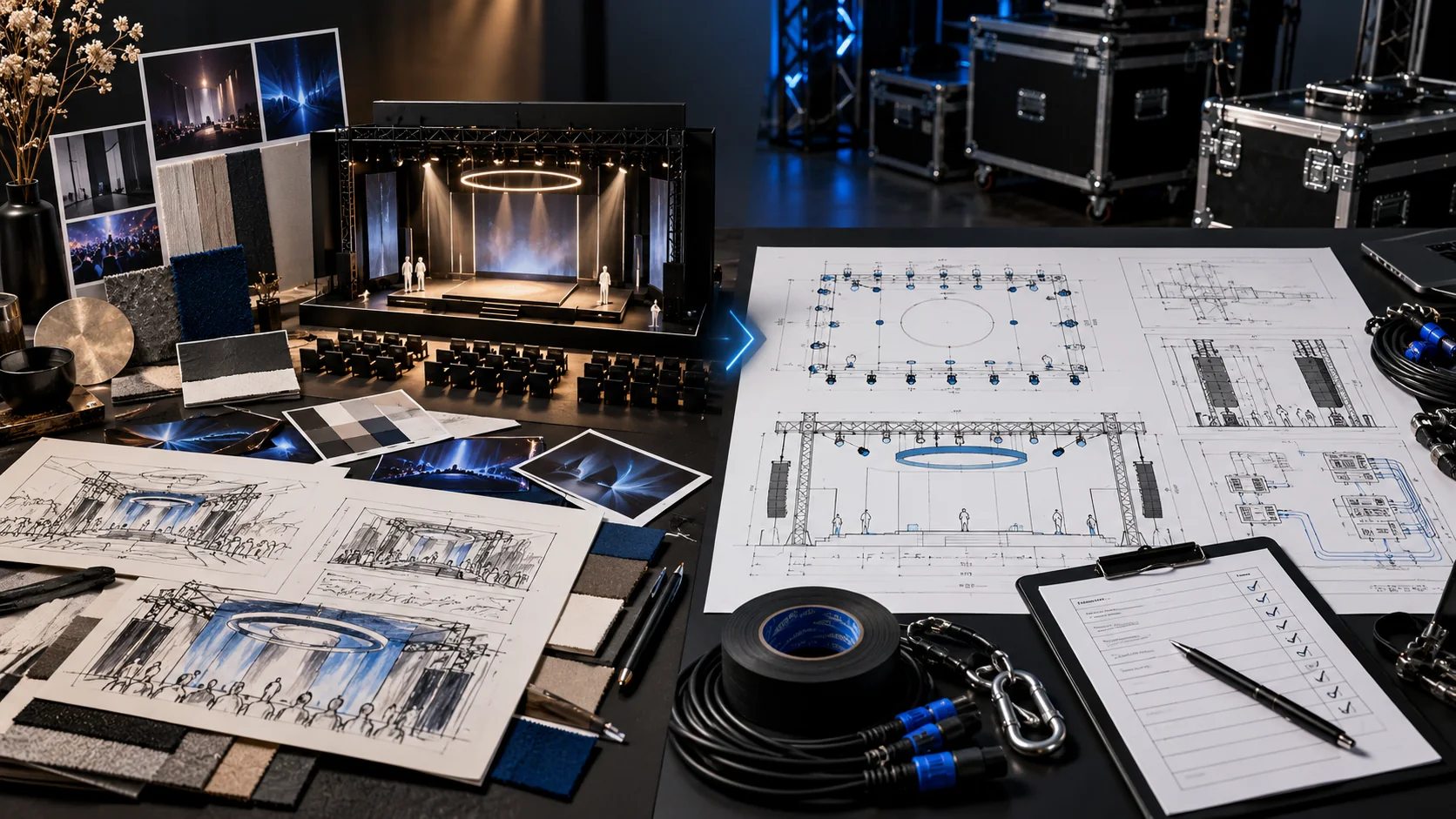
The two stages need to communicate closely, but they solve different questions. Mixing them too early can lead to supplier decisions before the event story is clear, or a beautiful concept that has not been checked against real constraints.
What event concept design decides
Concept design translates the brief into a coherent experience. It usually covers the audience and event objective, the theme or idea, how guests move through the space, the stage and screen direction, the visual language, and how the idea will be presented for approval.
At this stage, the team should be able to explain why the concept fits the event and how each major moment supports the message. The output may include a concept narrative, a guest journey, reference imagery, a presentation deck, layouts, and visualizations at an agreed level of detail.
What event production decides
Production planning turns an approved direction into coordinated work. Depending on the project, this may include technical drawings, engineering checks, vendor scopes, fabrication, lighting and audio plans, schedules, logistics, staffing, safety requirements, and on-site coordination. These details depend on the venue, suppliers, regulations, and approved budget.
A practical handoff
| Concept stage | Production stage |
|---|---|
| Why the event exists | How the approved event is delivered |
| What guests should experience | What teams, vendors, and equipment are required |
| The theme, journey, and key moments | Technical specifications, schedule, and coordination |
| Visual direction for decision-making | Production documentation and execution controls |
The handoff is strongest when each visual is labelled with its status and purpose. A concept render communicates direction; it should not be treated as an engineering drawing unless it has been developed and checked for that purpose.
When should production partners join?
Bring production knowledge into the conversation early enough to flag venue, feasibility, safety, or budget constraints. Keep the creative idea clear while those checks happen. This allows the team to adapt the concept with evidence instead of discovering a major constraint after approval.
Overwrite supports the concept side by shaping the event story, guest journey, pitch presentation, and visual proof before execution. The exact boundary depends on the brief and the production partners involved.
Need to clarify the idea before vendor execution? Start with project direction and align the concept, scope, and required handoffs.
THE OVERWRITE APPROACH
Make the next decision clear before work moves forward.
Overwrite starts with the real brief, audience, and constraints, then shapes the creative direction and practical next step around what the project needs.
Event Experience Design