
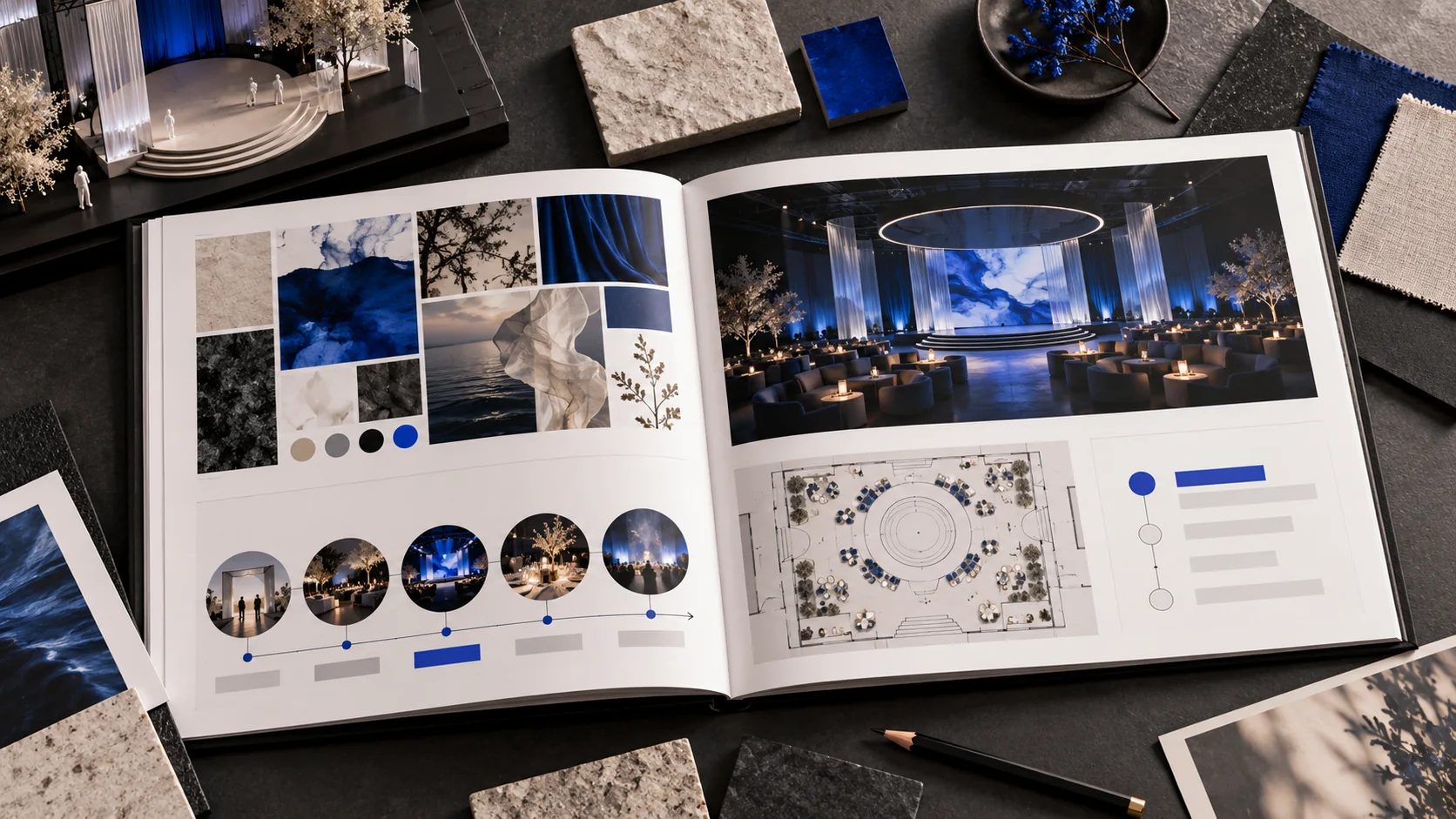
A practical deck structure
1. Brief and objective. Summarize the audience, event purpose, key message, date or venue context, and constraints. Confirm what the presentation needs the client to decide.
2. Audience insight. Describe what attendees need from the event and what the brand or organizer wants them to remember. Keep this tied to the brief rather than adding unsupported claims about audience behavior.
3. Central concept. State the event idea in one memorable sentence. Explain why it fits the objective, and show the mood, language, and visual cues that carry it through the experience.
4. Guest journey. Map arrival, registration, pre-function, main reveal, sessions or interactions, and departure. Use a simple sequence so clients can see how the idea unfolds over time and space.
5. Spatial and stage direction. Include the key layouts and views needed to understand the environment. Show the relationship between stage, screen, audience, entry, circulation, and experience zones.
6. Content and moments. Identify the important programme beats, screen content direction, interaction, or reveal moments. Explain how each supports the central idea.
7. Visual proof. Add selected references, renders, or walkthrough direction. Label conceptual visuals and avoid presenting them as final technical documentation.
8. Scope and next decisions. Close with what is included in the concept, what needs confirmation, who owns the next decision, and what information is needed for the next stage.
Keep each page useful
Give every slide one job. Use headings that state the point, visuals that prove it, and short supporting copy. If a page needs a long explanation, the concept or sequence may need to be clarified. A polished deck should make discussion easier, not leave the client guessing about the idea or the next step.
Overwrite's event story and pitch deck work can connect theme, guest journey, stage direction, and visual presentation before production begins. Preparing an event proposal? Share the brief and the decision the deck needs to support.
THE OVERWRITE APPROACH
Make the next decision clear before work moves forward.
Overwrite starts with the real brief, audience, and constraints, then shapes the creative direction and practical next step around what the project needs.
Event Story & Pitch Decks