
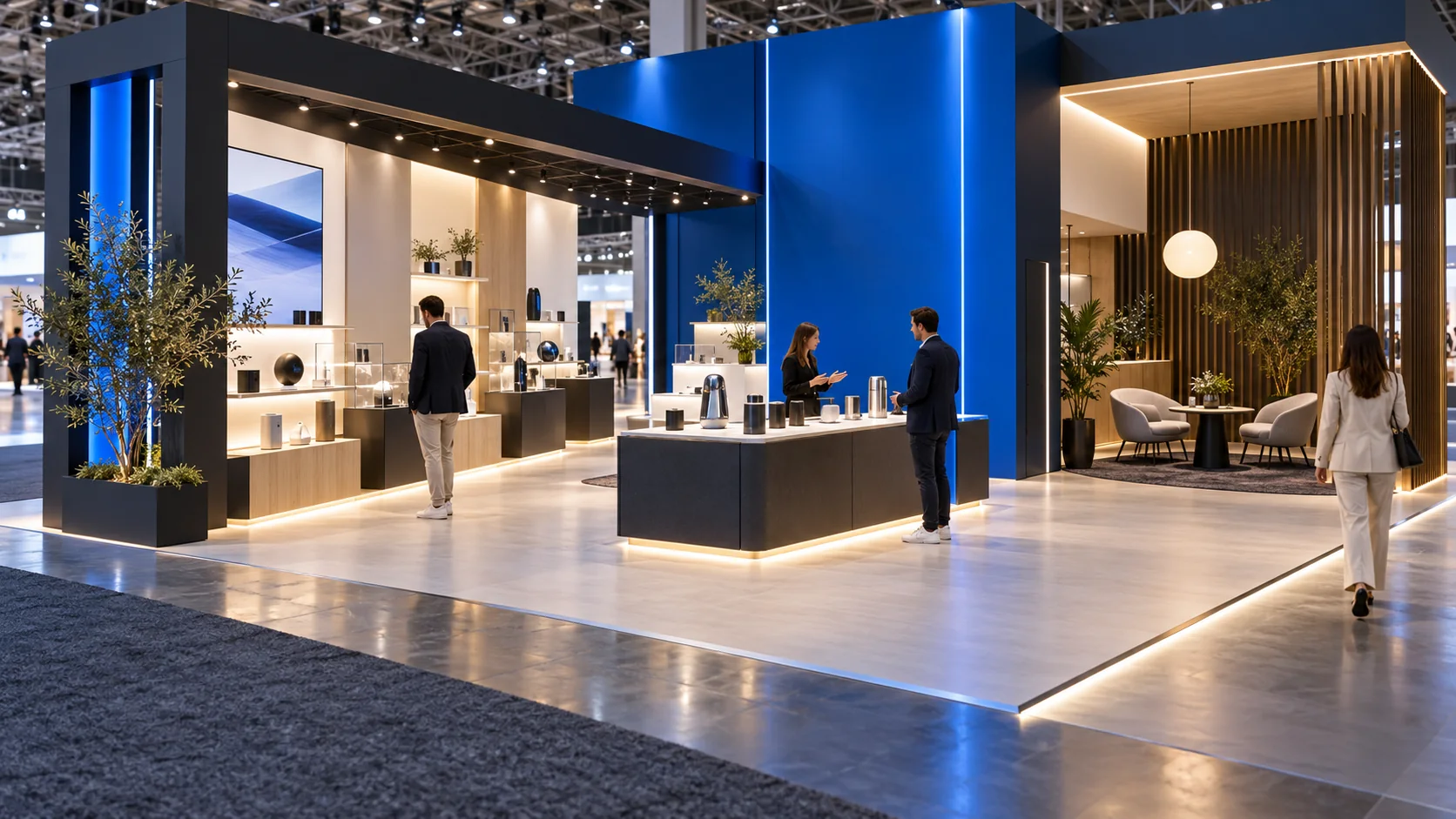
Start with the stand's job
Clarify what the team needs the stand to accomplish. A product launch may need a focused reveal and demonstration. A lead-generation stand may need welcoming conversations and a clear way to capture interest. A brand showcase may need a memorable visual idea supported by strong storytelling.
Name the priority audience, the main message, the desired action, and any operational needs. The number of visitors, staffing, storage, meeting privacy, accessibility, and venue restrictions all influence the layout.
Design the first sightline
Visitors often decide quickly whether to approach. Make the primary message and strongest visual easy to read from the relevant aisle. Avoid blocking that view with secondary graphics, tall structures, or displays that compete for attention.
Give people more than one comfortable way in
An inviting stand makes entry feel natural. Keep circulation clear and avoid creating a single bottleneck. Place an initial interaction near the edge, with deeper product exploration or meetings further inside. If a demonstration attracts a group, allow space for people to pause without blocking others.
Separate discovery from discussion
Visitors who want a quick look and visitors ready for a detailed conversation have different needs. A useful stand can support both: open product or experience zones for discovery and a quieter area for longer discussions. These zones should feel connected while allowing staff to manage them smoothly.
Test the concept before finalizing it
Review the plan from the aisle and from a visitor's eye level. Trace how someone enters, sees the message, approaches the product, speaks with the team, and exits. Then check sightlines, accessibility, service routes, storage, and venue requirements with the relevant project partners.
Visualizations can help stakeholders understand the concept before fabrication. A plan view explains circulation; perspective views show brand presence and scale. They communicate design intent, while final technical and safety checks remain part of production planning.
Overwrite's event and exhibition design work connects the story, visitor journey, presentation, and visual proof. Have an exhibition brief? Share the objective, audience, stand size, and venue details to discuss the right direction.
THE OVERWRITE APPROACH
Make the next decision clear before work moves forward.
Overwrite starts with the real brief, audience, and constraints, then shapes the creative direction and practical next step around what the project needs.
Event Experience Design